

Learning how to grow revenue effectively involves executing three small, sustainable strategic shifts instead of relying on one major transformation. Success comes from maximizing existing customer lifetime value, entering accessible new markets, and introducing iterative product improvements that build compounding financial momentum over time.
Many business owners find themselves trapped in a cycle of chasing the next silver bullet to fix their revenue stagnation. They invest heavily in a single marketing campaign or a new product launch, only to realize that a one-off win does not build a sustainable company. True growth is rarely the result of a single, heroic effort; it is the outcome of refining the underlying systems that drive your business forward. In this guide, we break down the three fundamental levers of revenue generation. You will learn how to increase your customer base through targeted acquisition, raise your average transaction value with better systems, and improve purchase frequency through operational excellence. By focusing on these three specific moves, you can move away from unpredictable spikes and toward a disciplined, compounding growth strategy that ensures long term stability.
The Dangerous Myth of the Silver Bullet in Business Growth
Business owners often feel the pressure to find a silver bullet to solve their growth plateaus. This usually manifests as a search for a singular, high stakes event; a transformative acquisition, a radical pivot into a new industry, or a viral marketing campaign intended to generate overnight success. While these events make for compelling headlines, they rarely form the foundation of a resilient enterprise. At GoScale Partners, we see this Big Move fallacy as a significant risk to established organizations. Relying on a single event is essentially gambling with the company's future rather than building it.
In reality, understanding how to grow revenue effectively requires a shift toward incremental, operational excellence. For established firms in Omaha and throughout the Midwest, sustainable scaling is rarely the result of a single gamble. Instead, it is the product of strategic growth initiatives that prioritize compounding small wins over time. By utilizing expert operational leadership, companies can identify and optimize the levers that already exist within their business. This disciplined approach ensures that expansion is supported by stable infrastructure, allowing fractional COO services to guide a business from good to great through precision rather than luck.
Move One: Increase the Number of Customers Through Targeted Acquisition
Shifting the focus from high stakes gambles to operational levers begins with understanding customer acquisition. While bringing in new clients is the most recognizable method for how to grow revenue, it is often executed with a lack of precision that erodes margins. Most businesses chase volume, believing that more leads naturally equate to more profit. However, scaling an established business requires a transition from broad market appeal to a strictly defined Ideal Customer Profile (ICP). This profile identifies the clients who not only need the service but also possess the characteristics that make them highly profitable to serve.
The role of expert operational leadership plays a critical role in ensuring that acquisition efforts remain mathematically sound. A business cannot scale effectively if the Cost Per Acquisition (CPA) is too high relative to the Lifetime Value (LTV) of the customer. Fractional COO services help firms audit these metrics to ensure that marketing spend and sales efforts are targeted toward high LTV segments. By tightening the feedback loop between the sales process and operational capacity, businesses can avoid the common trap of acquiring low value customers who consume excessive resources and dilute the quality of service.
For businesses operating in the Omaha market, this move often requires a refinement of local positioning before looking at national expansion. The Midwest business landscape rewards reliability and deep regional expertise. Establishing a dominant local position through targeted strategic growth initiatives allows a firm to stabilize its operations and cash flow. Once the acquisition model is proven and the unit economics are favorable locally, the infrastructure is in place to support geographic expansion without risking the core business. This disciplined approach ensures that new customer growth contributes to the bottom line rather than just increasing the top line noise.
Move Two: Increase the Average Transaction Value with Better Systems

Once a business has identified its ideal customer profile, the focus must shift from simply securing a contract to maximizing the value of every engagement. Increasing the average transaction value is a fundamental pillar in the quest for how to grow revenue, yet many established firms treat it as a secondary concern or a matter of simple price hikes. True operational scaling involves expert operational leadership to design a service delivery model where higher-value engagements are the logical conclusion of solving a client’s problem completely. This is not about being a pushy salesperson; it is about building systems that ensure no value is left on the table.
Systemic bottlenecks often prevent teams from identifying upselling or cross-selling opportunities. For example, if the handoff between sales and project management is siloed, the delivery team may notice additional client needs that the salesperson missed, yet they lack the framework to communicate those needs back to the client effectively. Fractional COO services address this by auditing the entire customer journey to find these friction points. By implementing strategic growth initiatives that integrate feedback loops between departments, businesses can ensure that every point of contact becomes an opportunity to provide more value.
Practical application of this move might include tiered service packages, automated discovery checklists for account managers, or value-based pricing models that align the firm’s incentives with the client’s success. When these systems are operational, the suggestion of a larger engagement feels like a consultative recommendation rather than a sales pitch. For an established Omaha firm, this refined approach allows the business to deepen existing relationships while improving profit margins on every contract signed. This provides the necessary cash flow to support the third lever of growth: purchase frequency.
Move Three: Increase the Frequency of Purchase through Operational Excellence

While increasing transaction value stabilizes cash flow, the long term sustainability of that revenue depends on how often those transactions occur. The third lever in understanding how to grow revenue effectively shifts the focus from the initial sale to the enduring relationship. Increasing the frequency of purchase is often the most overlooked strategy in a growth plan, yet it is mathematically the most capital efficient. It is a well established fact that retaining an existing client is significantly less expensive than acquiring a new one. In many B2B environments, the cost of acquisition is only recovered after the second or third transaction. If a business lacks the operational discipline to ensure repeat engagements, it is trapped in a cycle of expensive, high effort acquisition that limits long term profitability.
True purchase frequency is a byproduct of reliability. When a company achieves operational excellence, it removes the friction that prevents a client from returning. This requires moving beyond basic service delivery toward a structured customer success framework. Expert operational leadership ensures that the client experience is standardized and predictable. If the quality of work fluctuates based on which project manager is assigned or which technician is on site, the client will naturally hesitate to re-engage. By implementing strategic growth initiatives that standardize delivery, a business transforms its reputation into its most effective sales tool.
Operational excellence also involves creating proactive touchpoints that identify new needs before the client even realizes they exist. A fractional COO services provider can help a firm design internal systems that trigger follow ups based on usage patterns, contract milestones, or performance data. These are not arbitrary sales calls; they are operationalized checkpoints that ensure the client is continuously receiving value. For an established business, growth is the natural outcome of a company that is so reliable it becomes the default choice for every subsequent need. This stability creates the foundation for the final consideration: the sequence in which these three moves are executed.
Why the Order of These Moves Changes Everything
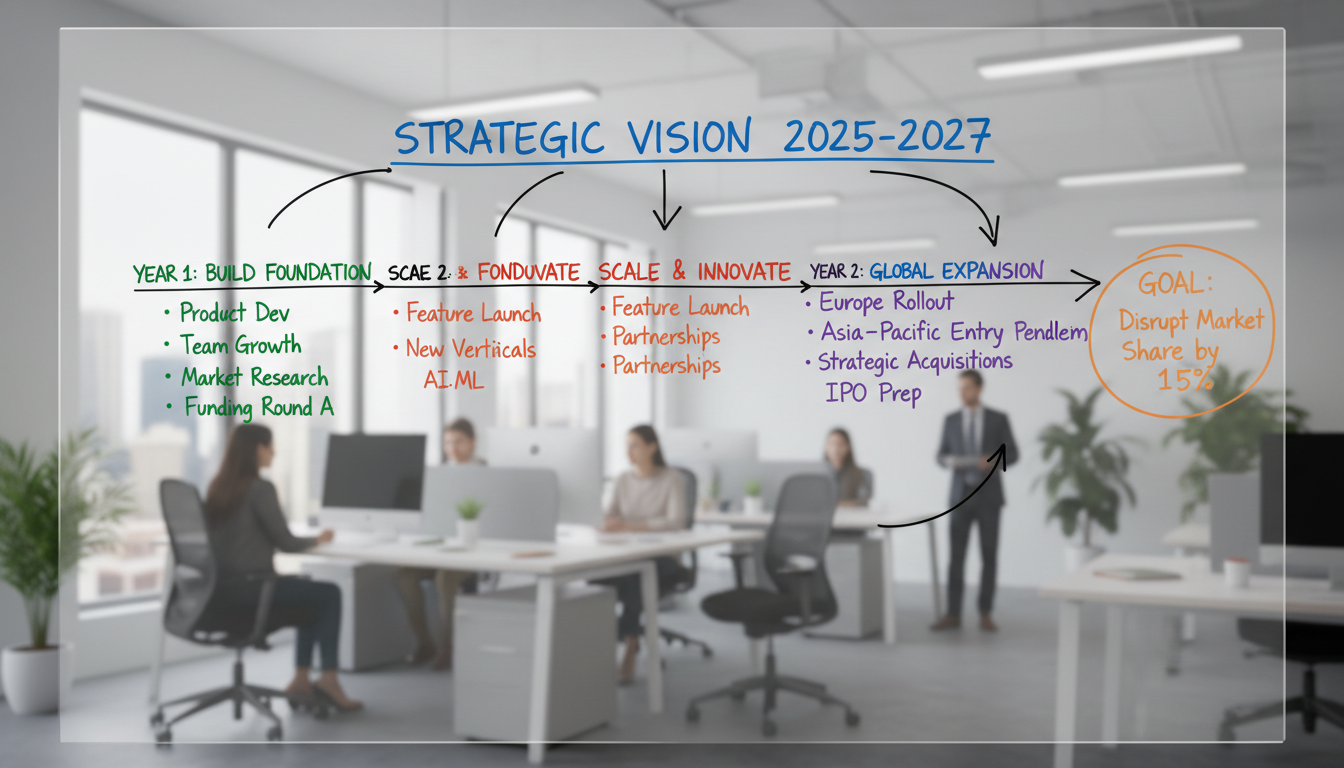
Understanding these three levers is only half the battle; the sequence in which you pull them determines whether your business scales or simply strains. Most leadership teams instinctively start with Move One, pouring resources into targeted acquisition. However, attempting to acquire new customers before you have mastered Move Three, purchase frequency and retention, is like pouring water into a leaky bucket. It is an expensive, inefficient use of capital that forces your sales team to work twice as hard just to replace the clients who are quietly exiting through the back door.
A fractional COO services engagement typically reverses this traditional instinct. The priority shifts toward internal efficiency and the delivery systems required to maximize Move Two, transaction value. By optimizing the ways a company delivers value and ensures repeat business first, you guarantee that the organization can actually handle the influx of new volume. This strategic sequencing ensures that every new dollar of revenue is captured by a stable, high margin framework.
This deliberate approach prevents the growth pains that often sink established companies during a sudden expansion. Rapid acquisition without the operational infrastructure to support it leads to service delays, employee burnout, and a tarnished reputation in the local market. Through expert operational leadership, businesses ensure that their strategic growth initiatives are grounded in reality. When the sequence is correct, figuring out how to grow revenue stops being a chaotic scramble for leads and becomes a controlled, predictable expansion of a healthy enterprise.
How an Omaha Fractional COO Implements This Framework
Implementing this framework within an Omaha business requires more than a theoretical understanding; it requires local execution that accounts for the specific nuances of the Midwest market. GoScale Partners LLC begins every engagement with a comprehensive operational audit to determine where a company stands relative to the three growth levers. We identify if a firm is leaking revenue through poor retention or if their acquisition costs are out of alignment with regional norms.
Many Omaha firms transitioning from good to great face a common bottleneck: the regional talent gap and a hesitation toward rapid technological adoption. Expert operational leadership provides the roadmap to bridge these gaps by automating legacy processes and designing recruitment systems that attract high performers. Fractional COO services offer a unique advantage here. They provide established companies with the strategic depth of a veteran executive to oversee these strategic growth initiatives without the financial burden of a full time C-suite salary. This model allows Omaha business owners to stabilize their foundations and learn how to grow revenue through precision engineering rather than just adding headcount.
Sustainable revenue growth rarely comes from a single, massive transformation. Instead, it is the result of focused, incremental improvements that build momentum over time. By mastering these three small moves, your business can achieve lasting results without the risks of overextension. If you want expert help navigating these strategic shifts, our team is ready to guide you. To see how we support long term success, you can read more About our team and our unique approach to scaling businesses.