

Operational leadership is essential for a successful future of work AI redesign because it bridges the gap between technological capabilities and human workflow integration. Organizations must prioritize expanding human potential through strategic collaboration; meanwhile, managers must evolve into AI champions to ensure long-term engagement and efficiency.
Many executives view artificial intelligence as a simple tool for head-count reduction; however, this narrow focus often creates fragmented workflows and deep-seated employee resentment. When organizations prioritize immediate cost-cutting over operational re-engineering, they inevitably fall into the replacement trap. This approach misses the fundamental shift occurring in the modern enterprise. True competitive advantage stems from how operations leaders integrate human talent with machine intelligence to expand total capability. In this article, we explore how to move beyond basic automation toward a complete redesign of work. You will learn the three pillars of operational excellence, the critical role of middle managers in driving adoption, and the specific reinvestment strategies necessary to ensure your AI transition does not become a statistic of failure.
The AI Replacement Trap: Why Leading Firms are Redesigning Work Instead
Many business leaders view artificial intelligence primarily through the lens of headcount reduction. While the immediate appeal of lowering payroll costs is clear, this perspective often leads to what we call the AI replacement trap. Gartner predicts that by 2029, 30% of employees laid off due to AI replacement will need to be rehired at significantly higher costs. This cycle occurs because firms realize, too late, that they did not just automate a task; they deleted institutional knowledge, cultural cohesion, and human judgment that software simply cannot replicate.
Simply swapping human capital for software creates profound operational voids. A software tool can process data at scale, but it lacks the ability to navigate the nuances of a client relationship or adjust to a sudden market shift with the tactical agility of a seasoned team member. At GoScale Partners, we argue that a successful future of work AI redesign requires shifting from a replacement mindset to a redesign mindset. The replacement mindset focuses on short term cost savings, which often evaporate when the business loses its ability to innovate or maintain high service standards. In contrast, the redesign mindset focuses on long term scaling by redistributing human energy toward strategic growth initiatives.
When an organization leverages expert operational leadership, the goal is never merely to cut costs; it is to maximize organizational capacity. We view this transition as an operational evolution rather than a simple headcount reduction strategy. For companies looking to make the transition from good to great, AI should be used to eliminate administrative bottlenecks. This allows the existing workforce to operate at a higher level of complexity, ensuring the firm remains competitive in an increasingly automated landscape. Instead of asking how many people a tool can replace, leaders should ask how much more their current team can achieve when their time is redesigned for high value output.
Shift 2: Expanding Human Capability through AI Augmentation
To navigate this evolution successfully, leaders must distinguish between automation and augmentation. Automation seeks to remove the human from the process entirely, whereas augmentation focuses on enhancing the human's ability to deliver value. Effective work redesign requires a clinical assessment of workflows to isolate high human value tasks. These are functions where human judgment is non negotiable, including strategic relationship building, complex problem solving, and ethical oversight. By offloading repetitive data aggregation and administrative busywork to AI, an organization preserves its most expensive asset, human cognitive energy, for higher level functions.
The World Economic Forum 2025 findings underscore this shift, noting that while technical roles are evolving, the demand for soft skills and strategic oversight is accelerating. For established businesses in Omaha, this shift is particularly critical for mid level managers who are often buried under administrative bottlenecks. Instead of spending hours on manual reporting or routine scheduling, these leaders can pivot their focus toward strategic growth initiatives that require local market expertise and nuanced client engagement.
When we implement a future of work AI redesign, we are essentially recalibrating the ratio of effort to impact. If a department head is no longer required to act as a data entry clearinghouse, they can spend their time identifying new market opportunities or mentoring junior talent. This is not just a technical upgrade; it is a fundamental expansion of what a single employee can contribute to the firm's bottom line by focusing on the outputs that software cannot duplicate.
Shift 3: Redesigning Work for AI
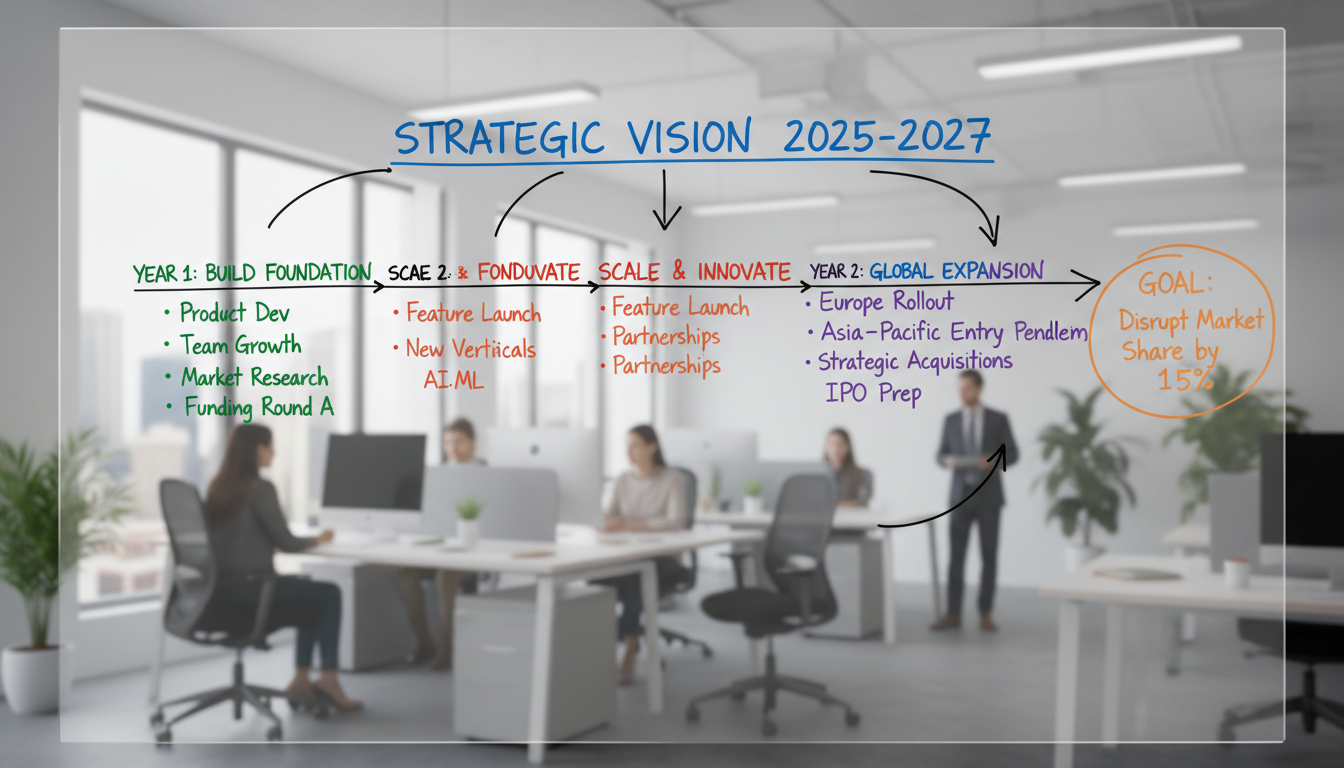
The transition from augmentation theory to operational reality requires a structured framework. At GoScale Partners, we approach redesigning work for AI through three specific pillars that move beyond the excitement of the technology and focus on the mechanics of the business. This process treats the organization as a living system where every adjustment to a role impacts the surrounding ecosystem.
1. Task Decomposition A common mistake in operational planning is viewing a job as a monolithic block of time. In reality, a role is a collection of distinct tasks. To identify where AI fits, leaders must break these roles down to the task level. For example, a senior accountant’s job includes data entry, reconciliation, regulatory research, and client advisory. While AI can handle the first two with high precision, the latter two require the nuanced judgment provided by expert operational leadership. By isolating high-volume, low-variability tasks, firms can surgically insert AI tools without disrupting the core value the employee provides.
2. Skill Mapping Integrating AI creates a capability gap that technical manuals cannot fill. Once tasks are reassigned, the team requires new competencies to manage and verify AI outputs. This is not about learning to code; it is about developing human-in-the-loop skills like prompt engineering, algorithmic bias detection, and output auditing. For an Omaha firm to successfully navigate the transition from good to great, employees must evolve from doers to orchestrators who can direct technology toward strategic growth initiatives. This shift ensures that the human element remains the final arbiter of quality.
3. Workflow Integration The third pillar ensures that new tools do not become isolated silos. If an AI tool accelerates a marketing team's content production but the compliance department still operates on a manual 10-day review cycle, the organization has simply moved the bottleneck, not removed it. Operational excellence requires a strategic roadmap that aligns the speed of AI with the throughput of the entire company. Successful redesign ensures that the data generated by AI flows seamlessly into decision-making channels, allowing the business to scale without the friction of disconnected software or redundant processes.
Shift 4: Reinvesting AI Gains Instead of Pocketing Them

Gartner indicates that by 2027, 75 percent of organizations that treat AI gains solely as cost savings will be eclipsed by competitors who prioritize reinvestment. This statistic highlights a critical vulnerability in the future of work AI redesign; efficiency without direction leads to stagnation. For an established business, capturing 20 hours of liberated time per week is only the first step. The true test of expert operational leadership is determining exactly where those hours are redeployed.
Strategic reinvestment takes several concrete forms. First, it involves aggressive upskilling, ensuring that your team moves beyond basic tool usage to high level orchestration. Second, it facilitates new product development or service line expansion that was previously impossible due to bandwidth constraints. Finally, it allows for expanding market reach. An Omaha firm that automates its lead qualification process, for example, must immediately redirect that saved energy into deeper, high touch relationship building to capture new territory.
As we approach the Future of Work 2026 landscape, the gap between those who cut costs and those who build capacity will widen. If the time saved by AI is allowed to dissipate into general administrative drift, the organization fails to achieve a meaningful transition from good to great. Scaling requires a deliberate decision to funnel every gained hour back into strategic growth initiatives. Without this intentional redistribution of human capital, AI implementation becomes a race to the bottom rather than a ladder to the next level of operational excellence.
Shift 5: Managers as AI Champions

Gallup’s 2026 data highlights a precarious state for the modern workforce, with global employee engagement stalled at 20 percent and manager engagement declining to 22 percent. This disconnect often stems from a lack of purpose during periods of rapid technological change. Effective future of work AI leadership addresses this crisis by repositioning managers as facilitators of evolution rather than enforcers of tool adoption. When software takes over the routine tracking of output, the manager’s role must shift from monitoring to mentoring.
In a tech-heavy environment, managers become the primary architects of team culture and professional development. They are responsible for helping staff navigate the ambiguity of a future of work AI redesign, ensuring that the human element remains central to the process. At GoScale Partners, we provide the expert operational leadership necessary to help mid-level leaders evolve their management styles. Instead of spending hours on administrative oversight, these leaders are trained to focus on high-impact coaching and strategic growth initiatives.
This shift is vital for any organization looking to make a successful transition from good to great. By transforming managers into AI champions who prioritize human capability, firms can reverse engagement trends. When managers lead with a mentoring mindset, they help their teams see AI as a partner in excellence rather than a threat to their autonomy. This human-centric approach ensures that as the business scales, the culture remains resilient and aligned with long term objectives.
Implementing the Future of Work AI Redesign in Your Organization
Executing a future of work AI redesign requires a structured, iterative roadmap rather than a one-time software installation. Start by auditing current workflows to pinpoint where manual bottlenecks stall strategic growth initiatives. Focus first on low-hanging fruit: tasks with high volume and low variability that consume disproportionate amounts of team time.
Audit Workflows: Use the task decomposition method to separate human judgment from mechanical processing.
Select Initial Targets: Identify processes where AI tools can provide immediate relief to mid-level managers.
Run a Pilot: Redesign roles within one department to validate the new workflow before firm-wide adoption.
Iterate and Scale: Use pilot feedback to refine training and integration strategies across the organization.
In Omaha’s professional landscape, reputation and trust are vital assets. Transitioning through expert operational leadership ensures that technical efficiency never undermines the core values of your company culture. This deliberate approach facilitates a sustainable transition from good to great by treating AI as a permanent operational evolution.